.svg)


Most people who arrive at Bwiti House in Gabon describe the same problem, even when they use different words. Some say they feel out of control reactive, compulsive, unable to stop destructive patterns. Others say they feel lost, cut off from a sense of direction or purpose. Many simply say they no longer know who they are beneath all the noise.
In the Bwiti Missoko tradition, these are not separate problems. They are one problem: the ego has taken over the seat of the self.
For thousands of years, the Bwiti people of Gabon have used the sacred Iboga plant as the master tool for restoring that seat to its rightful occupant. Not the ego not the fearful, reactive, story-spinning mind but the true self: the part of you that existed before your wounds, before your conditioning, and that will exist long after your defenses dissolve.
This article explores what self-mastery means in the Bwiti tradition, how Iboga enables genuine ego control (not suppression), and the deep grounding practices that carry this transformation into everyday life.
What the Bwiti Mean by the "True Self"
In Western psychology, the "self" is often understood as something to be built through therapy, achievement, identity construction. In the Bwiti tradition, the self is not built. It is uncovered.
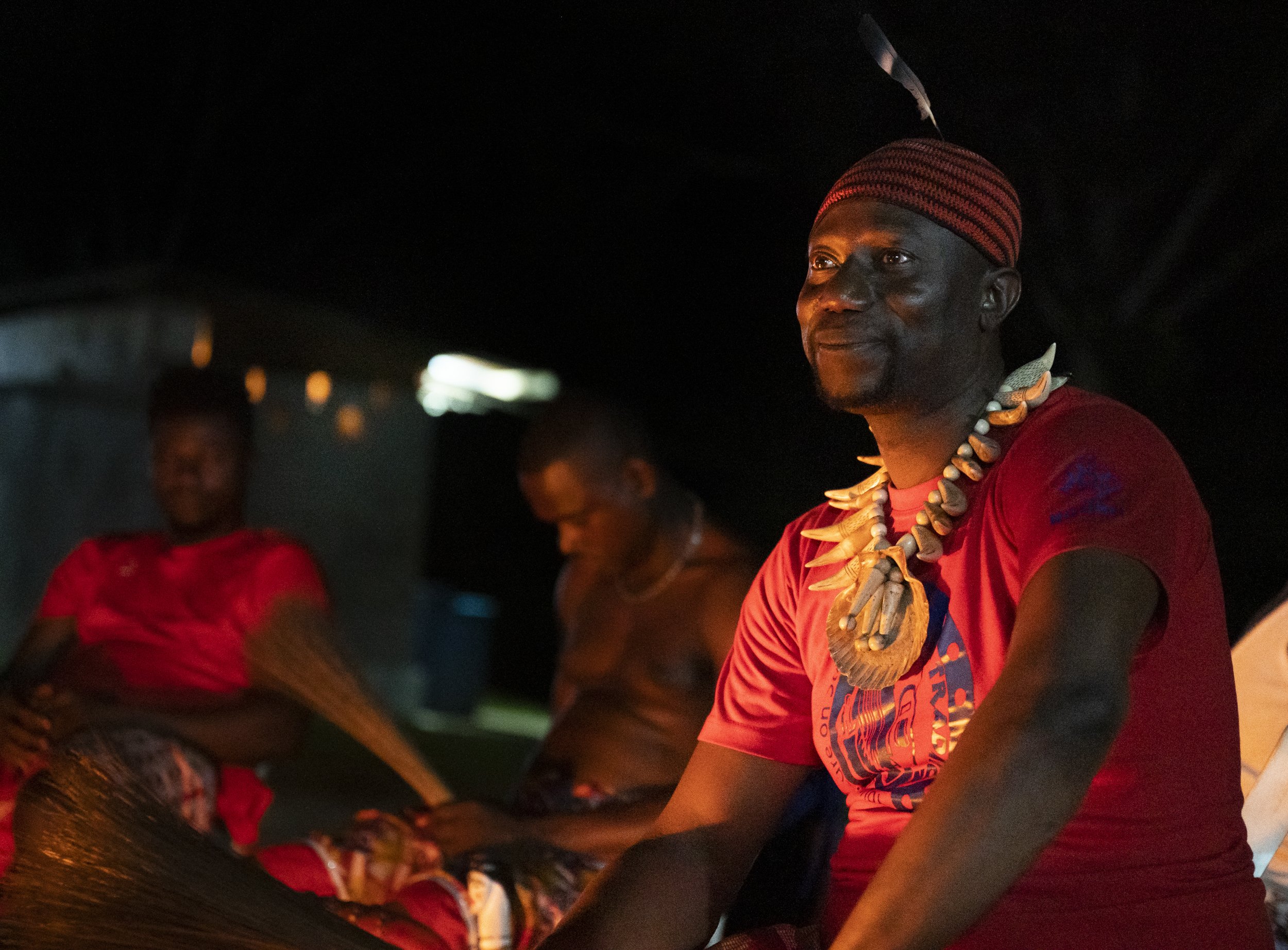
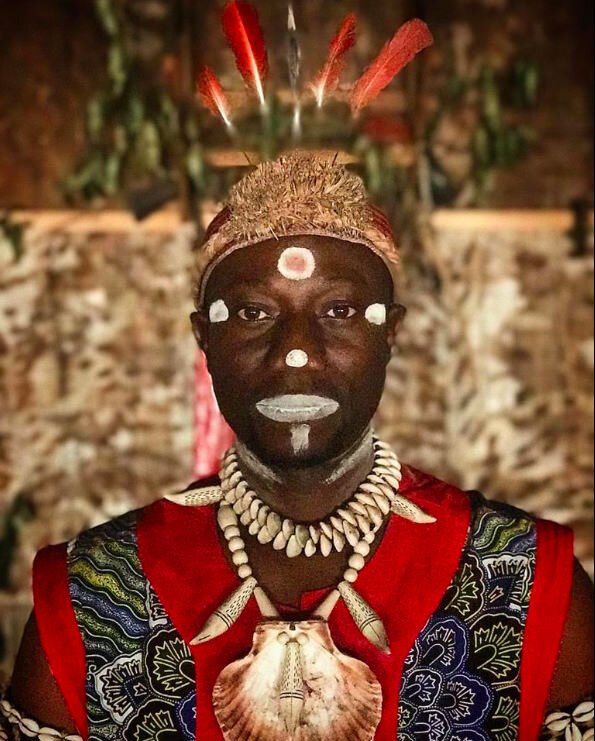
Moughenda Mikala, 10th-generation Bwiti Missoko shaman, describes it simply: "You already are what you are looking for. Iboga does not create anything new in you. It removes what is in the way."
What is in the way? In Bwiti cosmology, it is primarily the ego the collection of fears, stories, defenses, and conditioned reactions that the mind has assembled over a lifetime to protect you from pain. The ego is not evil; it was necessary. But when it becomes the primary driver of your life, it creates suffering: in your relationships, your choices, your sense of identity, and your connection to the world.
The Bwiti do not seek to destroy the ego. They seek to put it in its proper place as a useful servant, not the master of the house.
This is what self-mastery means in the Bwiti tradition: the true self (which they call nima or the soul-spirit) leading, with the ego in right relationship. Calm. Responsive instead of reactive. Rooted instead of adrift.
How the Ego Loses Its Grip During an Iboga Ceremony
The Iboga experience is unlike any other plant medicine or psychedelic encounter in one critical way: it does not take you outward into cosmic visions. It takes you inward ruthlessly, specifically, and deeply into your own life.
During a traditional Bwiti ceremony, the Iboga plant initiates what can be described as a complete life review. Participants see themselves clearly: their patterns, their repeated choices, the roots of their fears, the moments that shaped their defenses. This is not metaphorical. People report watching scenes from their past as if viewing a film present as a witness, not drowning in the emotion of the original moment.
This witnessing position is the key to ego work with Iboga.
The ego cannot survive being clearly seen. When you observe, with calm lucidity, exactly how your ego has been operating where the fear originated, what story it tells, what it has cost you something releases. Not because you forced it. Because the light of awareness, held for long enough, dissolves what the darkness was protecting.
Many participants describe a moment during the ceremony where they recognize the voice of the ego clearly its tone, its motives, its patterns and discover for the first time that they are not that voice. They are the one listening. That distinction, felt experientially rather than just understood intellectually, is the foundation of genuine self-mastery.
Ego Control Is Not Ego Suppression
One of the most important distinctions the Bwiti tradition makes and one that Western approaches often miss is the difference between ego control and ego suppression.
Suppression looks like discipline, willpower, and control. You hold the ego down through effort. It works for a while. Then it erupts. This is the cycle most people who arrive at Bwiti House have been living for years: control, then collapse. Willpower, then relapse. The effort of constant suppression is exhausting, and it never touches the root.
Ego control in the Bwiti sense is different. It comes from understanding. When the true self is established in its seat, the ego no longer needs to be fought. It simply quiets because the fear that animated it has been seen, acknowledged, and metabolized.
Iboga facilitates this metabolizing. The plant has a particular intelligence for finding the emotional root of ego-driven patterns. It does not simply show you that you have anger, for example. It takes you to the moment often in childhood where the anger was the only response available, where it became locked in as a survival strategy. Once that is seen with compassion and clarity, the charge dissolves. The pattern loses its grip.
This is why people who come to Bwiti House for what they thought was an addiction problem often leave with something much larger: a fundamental shift in their relationship to themselves.
Grounding: The Bwiti Dimension Nobody Talks About
Grounding is a word that has been diluted by wellness culture into something soft and vague breathing exercises, nature walks, earthing mats. In the Bwiti tradition, grounding is a precise and essential spiritual practice with a specific meaning: the capacity to remain in your body, in the present moment, connected to the earth and to truth, regardless of external turbulence.
The Bwiti say that most Westerners who arrive in Gabon are, in a fundamental sense, not in their bodies. They live in their heads in plans, fears, memories, projections. The body is simply a vehicle they haul around. This disconnection from the body is itself a major driver of ego dominance: a mind untethered from somatic reality becomes much more easily captured by its own stories.
Iboga, taken in the traditional Bwiti ceremony, is profoundly grounding in the somatic sense. Unlike other psychedelics that produce dissociation and a feeling of leaving the body, Iboga roots you more deeply into the body. The experience is intensely physical: you feel your heartbeat, your weight, your breath, your roots into the earth, with unusual clarity and presence.
This somatic rootedness is not incidental it is one of Iboga's most therapeutically significant qualities. When you are truly in your body, the ego loses one of its primary refuges. Thoughts about the past and future become less sticky when the body is fully present in the moment.
Bwiti Grounding Practices for After the Ceremony:
The Bwiti tradition does not end at the ceremony. Moughenda teaches participants a set of daily practices to maintain the grounding that Iboga initiates. These include:
1. Morning earth contact standing barefoot on natural ground at dawn, before engaging with any screen or obligation. The Bwiti consider this connection to the earth's field non-negotiable for maintaining clarity.
2. Breath awareness with sound the traditional Bwiti use of voice, especially humming and tonal sounds, as a way to bring consciousness back into the chest and belly. This is different from meditation silence; the vibration in the body itself is the anchor.
3. Physical work the Bwiti tradition has always included intentional physical labor as part of spiritual life. The body needs to be used, not just rested. This is why many participants in the provider training program spend time in the village helping with daily physical tasks.
4. Nature immersion not leisure nature walks, but deliberate presence in natural environments without the agenda of getting anywhere. The Bwiti forest is considered a teacher, and time in it is considered practice, not recreation.
5. Truth-telling perhaps the most challenging grounding practice the Bwiti offer. They hold that dishonesty including dishonesty with oneself is one of the primary causes of ungrounding. The practice of radical honesty in daily life, especially in relationships, keeps the energy body clean and the ego in check.
The Three Stages of Self-Mastery in Bwiti
Moughenda describes the path of self-mastery through Iboga as moving through three distinct stages, which do not necessarily correspond to three separate ceremonies:
Stage 1: Seeing The capacity to observe yourself clearly, without the distorting lens of ego defense. Iboga makes this possible at a depth that years of therapy often cannot reach. Most participants taste this in their first ceremony.
Stage 2: Understanding Seeing is not enough without meaning. The Bwiti ceremonial container the teachings, the music, the guidance of the nganga (healer) provides the framework for integrating what was seen. This is why Bwiti House is not simply an iboga ceremony: it is a teaching. Moughenda works to ensure that what was revealed in the visionary state becomes integrated into lived understanding.
Stage 3: Living The daily practice of applying what was understood. This is where most people struggle, and why Bwiti House's global provider network exists: to support participants in the months after their return, as the habits of ego re-assert themselves against the clarity of the ceremony.
Self-mastery in the Bwiti tradition is not a destination. It is a practice but it is a practice that Iboga makes exponentially more accessible by clearing the roots of ego dominance that normal practice cannot reach.
Who Comes to Bwiti House for Self-Mastery Work
Not everyone who arrives at Moughenda's village in Gabon comes for addiction. An increasing number of participants are people who, by any external measure, have "succeeded" and yet feel profoundly disconnected from themselves.
Entrepreneurs, executives, therapists, artists, parents. People who have done the work years of therapy, meditation retreats, breathwork, bodywork and who have reached a wall. The intellectual understanding is there. The insight is there. The change is not.
Iboga and the Bwiti tradition offer something these other modalities rarely can: a direct, experiential dissolution of the ego structure itself, held within a tradition that has been refining this process for thousands of years. Not by force, but by light. Not by suppression, but by understanding.
If you are ready to meet your true self not the story you tell about yourself, but the one who has always been present beneath the story Bwiti House in Gabon is one of the very few places on earth where this encounter can happen in its fullest traditional form.
Begin Your Path to Self-Mastery
Bwiti House offers authentic Iboga retreats in Gabon, led by 10th-generation Missoko Bwiti shaman Moughenda Mikala. Our ceremonies are not wellness experiences they are genuine initiations into one of the oldest traditions on earth.
If self-mastery, ego work, or grounding is part of what is calling you, we invite you to begin a conversation with us. The Iboga is waiting.