.svg)


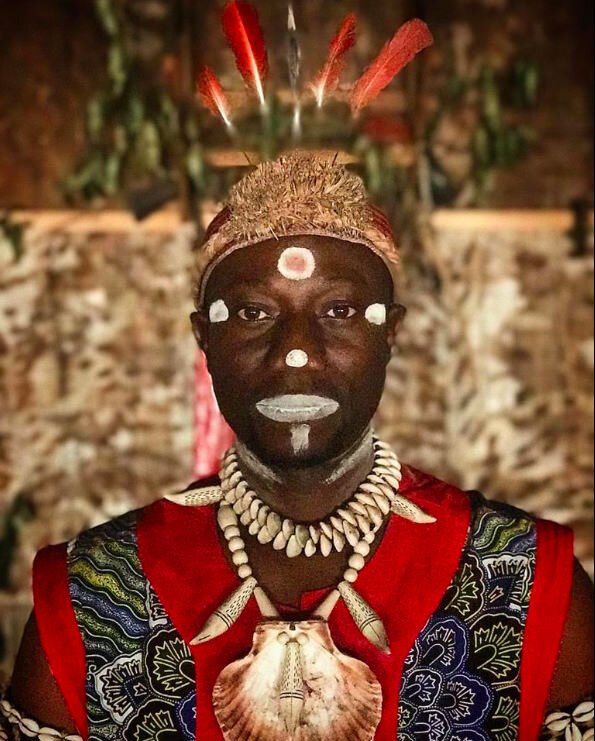
Coming to Gabon for an iboga retreat is unlike any other healing journey you will undertake. You are not visiting a facility that has imported a tradition from elsewhere — you are going to the source. The forest where iboga grows, the village where the Bwiti tradition lives, the community that has carried this practice for millennia. This distinction matters more than most people realize until they experience it.
This guide will walk you through every phase of the experience, from the moment you decide to come until your return home.
Before You Arrive
Medical Screening
Every participant undergoes comprehensive medical evaluation before acceptance. Our certified U.S. medical team reviews your complete health history, current medications, cardiac function (EKG required), liver function, and substance use history. This screening is thorough and non-negotiable, it exists to ensure your safety.
Certain conditions are absolute contraindications. These include significant cardiac abnormalities, severe liver impairment, active psychosis, and concurrent use of specific medications including SSRIs, MAOIs, and certain cardiovascular drugs. If any contraindication is identified, we will explain the situation honestly and, where possible, suggest alternative paths.
Preparation Period
In the weeks before arrival, our team guides you through a preparation process that includes dietary recommendations (reducing processed foods, caffeine, and alcohol), intention-setting conversations, and practical guidance for your journey to Gabon.
We also provide detailed information about what to bring, what to expect logistically, and how to prepare mentally and emotionally. The quality of your preparation directly influences the quality of your experience.
Getting to Gabon
Most international flights arrive at Libreville, Gabon's capital city. We coordinate airport pickups and transport to our village, which is located in the equatorial forest. The journey from Libreville includes a domestic flight or road transfer, depending on the program you have chosen.
Upon arrival at the village, you are welcomed by our community. The transition from airport to forest is itself part of the process, a gradual shedding of the outside world and entry into a different rhythm of life.
The Village
Our Missoko village is not a resort. It is a living community where the Bwiti tradition is practiced daily. You will hear the sounds of the forest, birds, insects, rain on leaves. You will sleep in traditional or semi-modern accommodations depending on the program. You will eat simple, nourishing meals prepared from local ingredients.
For those seeking more comfort, our Bwiti Life location on a private island in Gabon offers five private beach suites with modern amenities while maintaining the same ceremonial authenticity. The medicine and the tradition are identical; the accommodations differ.
Both settings share one essential quality: they are embedded in the natural environment where iboga originates. There is an unmistakable difference between working with this medicine in the land where it grows and doing so in an imported setting thousands of miles away.
The 8-Day Retreat Structure
Our standard retreat spans eight days and follows a carefully designed arc:
Days 1-2: Arrival and Preparation
The first days are devoted to settling in, meeting the community, and preparing for ceremony. You will have conversations with our shamans about your intentions and your history. There are teachings about the Bwiti tradition, the medicine, and what to expect during ceremony.
These days also serve a physiological purpose. Your body is adjusting to the climate, the food, and the rhythms of the village. Rushing into ceremony without this adjustment period compromises the quality of the experience.
Days 3-4: First Ceremony
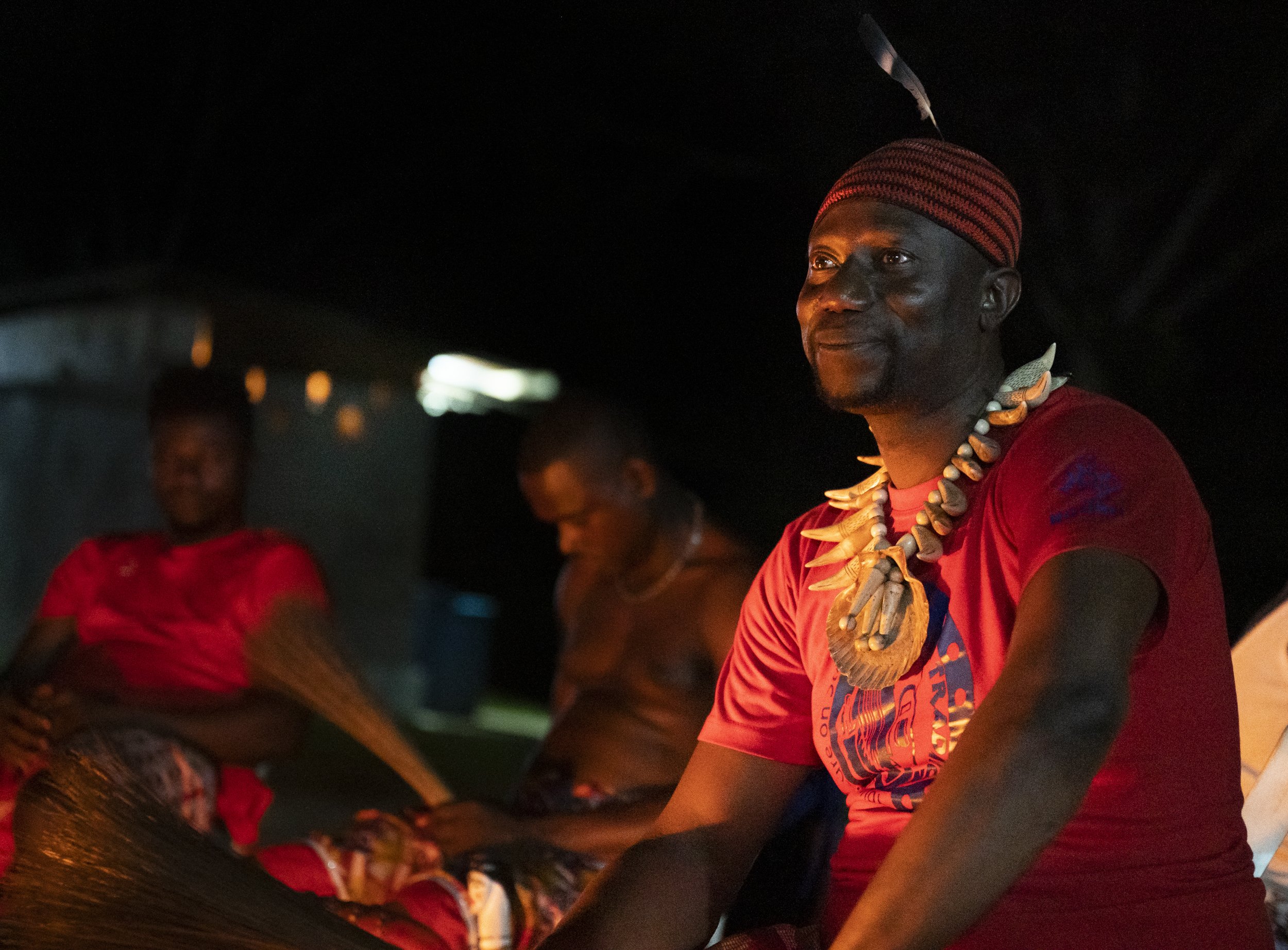
Your first iboga ceremony typically takes place in the evening. The temple, an open-sided structure with a central fire, is prepared. The community gathers. Music begins.
You will consume the iboga root bark in measured doses over the course of several hours. The taste is intensely bitter, most participants find it challenging. This is itself part of the process. The bitterness is a threshold. Crossing it requires commitment.
As the medicine takes effect over the following hours, you will enter a state of deep introspection. Physical sensations typically include heaviness, altered perception, and a distinct buzzing or vibration. Visually, you may experience vivid imagery, memory sequences, or encounters with symbolic or ancestral figures.
Throughout this experience, our shamans are present with its assistants including english speaking certified providers, tribe members playing music, monitoring your state, and providing guidance when needed. Their role is not passive observation. They are actively working with the energetic and spiritual dimensions of your process.
The acute phase of the ceremony lasts approximately 12 to 24 hours. Physical effects may persist for another 24 to 48 hours. During this period, you will be supported continuously by our team.
Days 5-6: Integration and Teaching
Between ceremonies, you rest, eat, hydrate, and process what has emerged. Our shamans offer teachings, not lectures, but experiential transmissions that help you contextualize your experience within the broader Bwiti understanding.
You may also spend time in nature, engage in conversation with other participants, or simply sit with what is arising. Integration is not a passive process. It requires active engagement with the material that ceremony has surfaced.
Day 7: Second Ceremony
A second, often deeper ceremony follows. Having gone through the initial experience, your system is more open and receptive. Many participants report that the second ceremony reaches dimensions the first only touched.
Day 8: Closing and Departure
The final day includes closing rituals, farewell conversations, and practical guidance for the transition back to your daily life. This transition is important — the insights and openness generated by iboga need to be protected and nurtured as you re-enter your normal environment.
The 14-Day Initiation
For those called to deeper work, our 14-day initiation program extends the retreat format into a full rite of passage. This includes multiple ceremonies of increasing depth, extended teachings on Bwiti philosophy and practice, and a formal initiation ceremony that marks the transition into a new phase of life.
The initiation is not a requirement, and we never pressure anyone toward it. But for those who are ready, it represents one of the most comprehensive transformational experiences available.
What the Experience Feels Like
Every iboga journey is unique, but certain patterns are consistent enough to describe:
Physical sensations. Weight, heaviness in the body. A distinct vibratory quality, many describe it as the sensation of the root bark connecting you to the earth. Reduced ability and desire to move. Some nausea, particularly during the initial phase.
Visual experience. Unlike the swirling, colorful visions associated with some psychedelics, iboga visions tend to be clear, coherent, and often cinematic. Many participants describe watching scenes from their life, sometimes forgotten memories, with extraordinary clarity. Others encounter symbolic imagery, ancestral figures, or abstract visual fields.
Emotional terrain. Iboga does not spare you from difficult emotions. If there is grief, you will feel it. If there is anger, it will surface. If there is shame, you will face it. This is the medicine's mechanism, by bringing suppressed emotional material into conscious awareness, it creates the conditions for genuine processing and release.
Mental clarity. Despite the intensity of the experience, many participants report moments of remarkable mental clarity, a kind of sober, lucid intelligence that observes and understands the material being presented. This is iboga's signature: it does not dissolve your rational faculties; it sharpens them.
Duration. The active experience typically lasts 18 to 36 hours, followed by a gradual return to baseline over the following days. Complete physical recovery usually takes 3 to 5 days, though many participants report enhanced clarity and energy that persists for weeks or months.
After the Retreat
The real work begins when you leave. Iboga opens doors and clears obstacles, but it is your responsibility to walk through those doors and build the life that your insights point toward.
We provide post-retreat integration support including follow-up conversations with our team, connection to our global alumni community, and guidance on practices that help sustain the benefits of your experience.
Many participants find that returning to the source, to Gabon, to the village, to the tradition, becomes a regular practice. Not because they are dependent on the medicine, but because the ongoing relationship with the Bwiti community and the periodic deepening of their practice supports a life of continued growth and authenticity.
Practical Information
Cost. Our programs range from the 8-day retreat to the 14-day initiation. Contact us for current pricing and availability.
Visa requirements. Most nationalities require a visa for Gabon. We provide guidance on the application process.
Climate. Gabon is equatorial — warm and humid year-round. Light, breathable clothing is recommended.
Language. Our team communicates in English, French, and several local languages. All teaching and guidance for international participants is provided in English or French.
What to bring. Comfortable clothing, personal medications (with medical team approval), journal, minimal electronics. We provide a detailed packing list upon enrollment.
We invite you to reach out to discuss whether this journey is right for you. No question is too basic, no concern too small. Coming to the source is a significant decision, and we want you to make it with full clarity.
Bwiti House has welcomed participants from over 150 countries since 1990. Our village in Gabon's equatorial forest is the original home of the Missoko Bwiti tradition.
Disclaimer: Just as no two people are the same, every journey follows its own unique path. Results and experiences are highly individual.