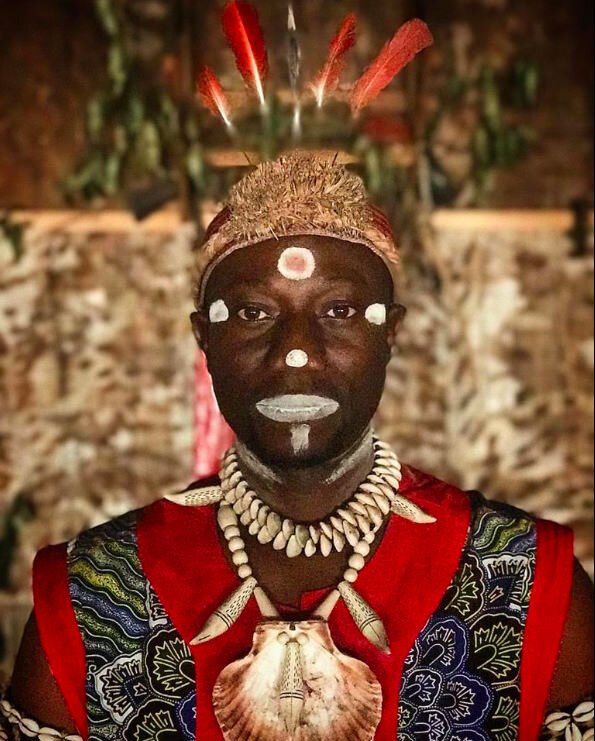
The 14-Day Bwiti Initiation: A Complete Guide
The Bwiti initiation is the heart of our tradition. It is not a workshop, not a retreat in the conventional sense, and not something that can be understood fully through description. It is a rite of passage — a deliberate process of confronting your deepest truth, releasing what no longer serves you, and being reborn into a more authentic version of yourself.
For the Bwiti, initiation is the most important event in a person's life. More significant than birth, marriage, or death. Because initiation is the moment when you consciously choose to meet yourself — without defense, without deception, without the comfortable stories that most people carry their entire lives without ever questioning.
This guide describes the structure and experience of a 14-day initiation at Bwiti House in Gabon. But understand: no guide can substitute for the experience itself.
Who Is Initiation For?
Initiation is not for everyone who comes to Bwiti House. It is for those who feel a deep calling to go beyond healing a specific condition and into a fundamental transformation of their relationship with themselves and with life.
Many people come first for an 8-day retreat and then return for initiation after their initial experience has shown them the depth that the tradition can reach. Others arrive knowing from the beginning that initiation is what they seek.
There are no prerequisites in terms of spiritual background, cultural identity, or prior experience with plant medicine. What is required is sincerity, courage, and willingness to be completely honest with yourself. Initiation will demand everything from you. It will give everything back — but only in proportion to what you bring.
We never pressure anyone toward initiation. If it is your path, you will know.
The Structure of the 14 Days
Phase 1: Arrival and Preparation (Days 1-3)
The first days are devoted to acclimatization, to the climate, the food, the rhythms of village life, and the energy of the forest. You are welcomed into the community and introduced to the people who will be supporting your process.
During this phase, you have extended conversations with the shamans about your life history, your intentions, and your fears. These conversations are not therapeutic intake sessions. They are the beginning of a relationship between you and the tradition that will carry you through what is to come.
You also receive teachings about the Bwiti worldview, not as abstract philosophy, but as practical orientation for navigating the experiences ahead. You learn about the role of truth in the tradition, the meaning of the ceremonial elements, and the significance of what you are about to undertake.
Physically, your diet is simplified. You rest. You spend time in the forest. Your nervous system begins to settle into a different frequency.
Phase 2: Opening Ceremonies (Days 4-6)
The first iboga ceremonies begin. These initial ceremonies are powerful but carefully calibrated, designed to open your system and begin the process of confrontation with self.
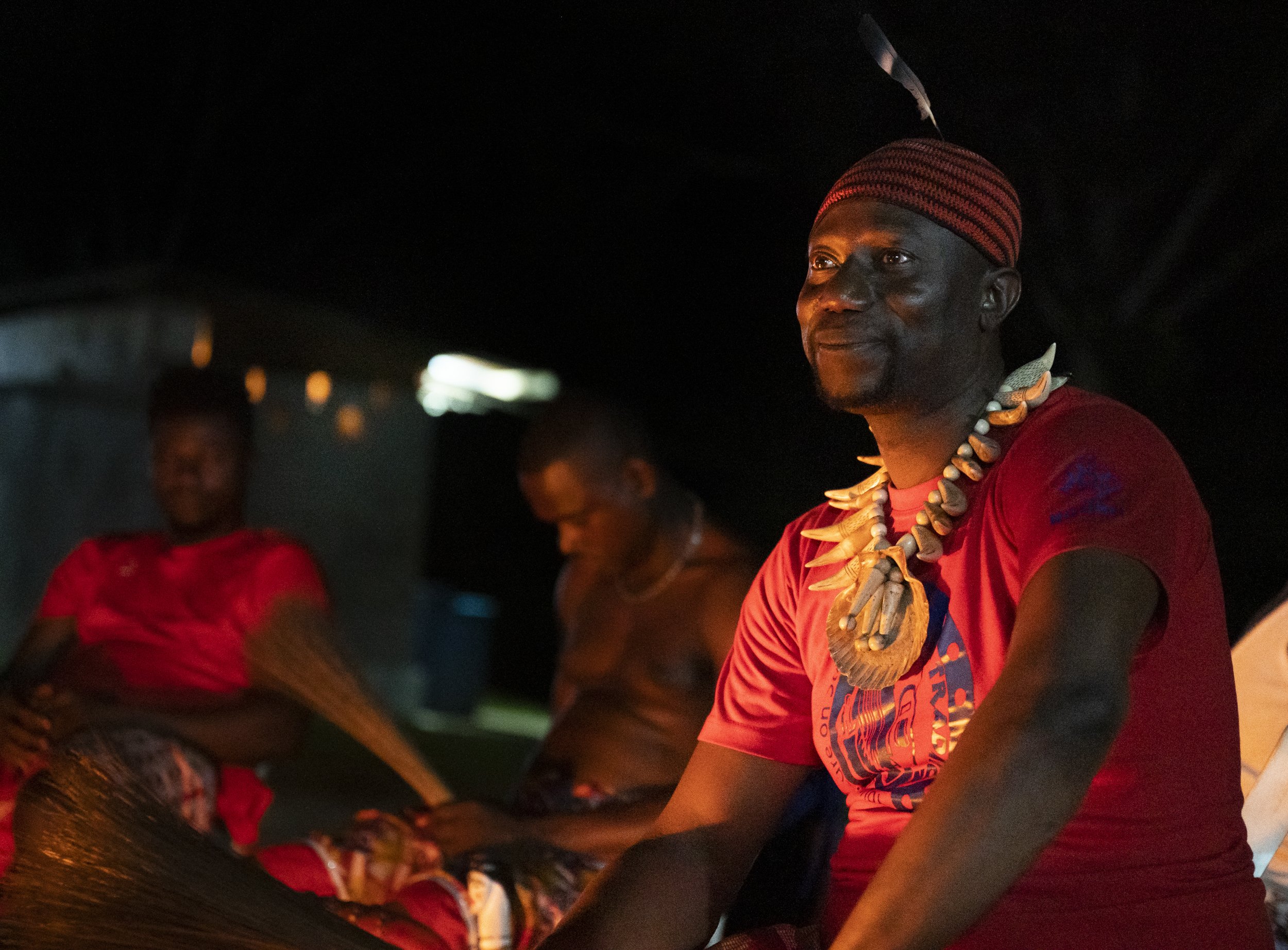
The ceremony takes place at night, in the temple, with fire, music, and the full presence of the community. You consume iboga root bark in graduated doses under the shaman's guidance. The taste is profoundly bitter. This bitterness is itself a teaching — it requires you to overcome resistance, to choose discomfort in service of truth.
As the medicine takes hold, the inner journey begins. The early ceremonies often surface the most accessible material first, recent concerns, immediate emotional patterns, surface-level narratives about who you are. This is necessary groundwork for what follows.
Between ceremonies, you rest, integrate, receive teachings, and prepare for the next phase. The shamans observe your process closely, adjusting the subsequent ceremonial approach based on what they perceive.
Phase 3: The Deep Work (Days 7-10)
The middle phase is where initiation goes beyond what a standard retreat can reach. By this point, the surface material has been addressed. The medicine now takes you deeper, into the foundational patterns, the core wounds, the inherited beliefs and traumas that most people never access in an entire lifetime of therapy.
This phase is intense. There is no gentle way to say it. You will confront truths about yourself that you have spent your entire life avoiding. You will feel emotions that have been buried for decades. You will see, with terrible clarity, the consequences of your unconscious patterns on yourself and others.
The shaman's role during this phase is critical. An experienced Bwiti shaman can perceive when a participant is approaching a threshold and provide the precise energetic and musical support needed to move through it safely. This is not a skill that can be learned from a manual. It requires years of training, personal initiation, and deep sensitivity to the spiritual dimensions of the process.
The Bwiti community holds the container, their presence, their songs, their prayers create a field of support that allows you to go where you need to go without losing yourself in the process.
Phase 4: The Initiation Ceremony (Days 11-12)
The formal initiation ceremony is the culmination of everything that has come before. It is the most sacred moment in the Bwiti tradition, and describing it in detail would dishonor its significance.
What can be said is this: the initiation represents a death and a rebirth. The person who entered the village 10 days ago ceases to exist. A new person — clearer, more honest, more aligned with their authentic nature — emerges.
This is not metaphor. The experience of initiation is, for most people, the most profound experience of their lives. It produces a before-and-after that is visible not only to the individual but to everyone around them.
Phase 5: Integration and Closure (Days 13-14)
The final days are devoted to integration, rest, and preparation for re-entry into the outside world. You receive final teachings about how to carry the Bwiti perspective into your daily life. You say goodbye to the community that has held you through this process. You receive your Bwiti name — a name that reflects the truth the medicine has revealed about who you are.
The transition back to normal life requires care. The openness and sensitivity that initiation produces need to be protected during the re-entry period. We provide guidance on how to navigate this transition, including practical recommendations for the first weeks after return.
What Changes After Initiation
The changes that participants report after initiation vary in their specifics but share common themes:
**Clarity about identity.** The layers of social conditioning, inherited beliefs, and defensive personas that most people mistake for their identity become transparent. You see them for what they are. This clarity persists, it is not a temporary high that fades.
**Reduced reactivity.** Emotional patterns that previously ran on autopilot, anger, anxiety, self-sabotage, people-pleasing, lose their automatic quality. You still feel emotions fully, but you are no longer controlled by them.
**Reconnection to purpose.** Many participants report that after initiation, they know what they are here to do. Not in a grandiose sense, but in a practical, embodied way that informs their daily choices.
**Changed relationships.** When you change your relationship with yourself, every other relationship shifts accordingly. Initiated individuals commonly report improvements in their most important relationships sometimes dramatic, sometimes subtle, always significant.
**Ongoing connection to the tradition.** Initiation is not the end of your relationship with Bwiti. It is the beginning. Many initiated individuals maintain ongoing practices, return to Gabon for deepening, and carry the Bwiti perspective into their communities as a lived philosophy.
The Commitment Required
A 14-day initiation in Gabon is a significant commitment of time, money, and emotional energy. It requires taking two to three weeks away from your normal life. It requires physical and psychological preparation. It requires willingness to go through discomfort, confusion, and emotional intensity without quitting.
We do not minimize this commitment. We also do not exaggerate what initiation offers. It does not fix everything. It does not eliminate all problems or guarantee a perfect life. What it does is strip away the barriers between you and reality between who you have been pretending to be and who you actually are. What you do with that clarity is up to you.
For those who are ready, this commitment is the most worthwhile investment they will ever make. We have heard this from thousands of initiated individuals over 35 years, and we continue to hear it from every new cohort.
Taking the First Step
If initiation is calling you, the first step is a conversation. Contact our team to discuss your situation, your intentions, and any questions you have. We will be direct with you about whether this is the right time and the right path for your specific circumstances.
There is no rush. The tradition has been here for thousands of years. It will be here when you are ready.
---
*Moughenda Mikala is a 10th-generation Missoko Bwiti shaman who has guided over 10,000 initiations since 1990. The Bwiti initiation at Bwiti House follows the same ceremonial forms that have been practiced in Gabon for millennia.*