.svg)


Could ibogaine help with Parkinson's disease? It is one of the most hopeful — and most misunderstood — questions in the iboga world. The honest answer: there is real scientific interest in how iboga's compounds affect the brain's repair systems, but ibogaine is not a proven or approved treatment for Parkinson's, and the evidence in humans is extremely limited. This guide explains what is real, what is only theoretical, and the serious safety issues anyone with Parkinson's must understand.
We believe people facing a serious diagnosis deserve the truth, not marketing. So rather than promise a cure, this article lays out the science, the unknowns and the risks plainly — because Parkinson's is serious, and so is iboga.
What Is Parkinson's Disease?
Parkinson's is a progressive neurodegenerative disorder caused by the gradual loss of dopamine-producing neurons in a brain region called the substantia nigra. This leads to tremor, stiffness, slowness of movement and balance problems. There is currently no cure; standard treatments such as levodopa manage symptoms by replacing or mimicking dopamine, but do not stop the underlying loss of neurons.
Why Is There Interest in Ibogaine for Parkinson's?
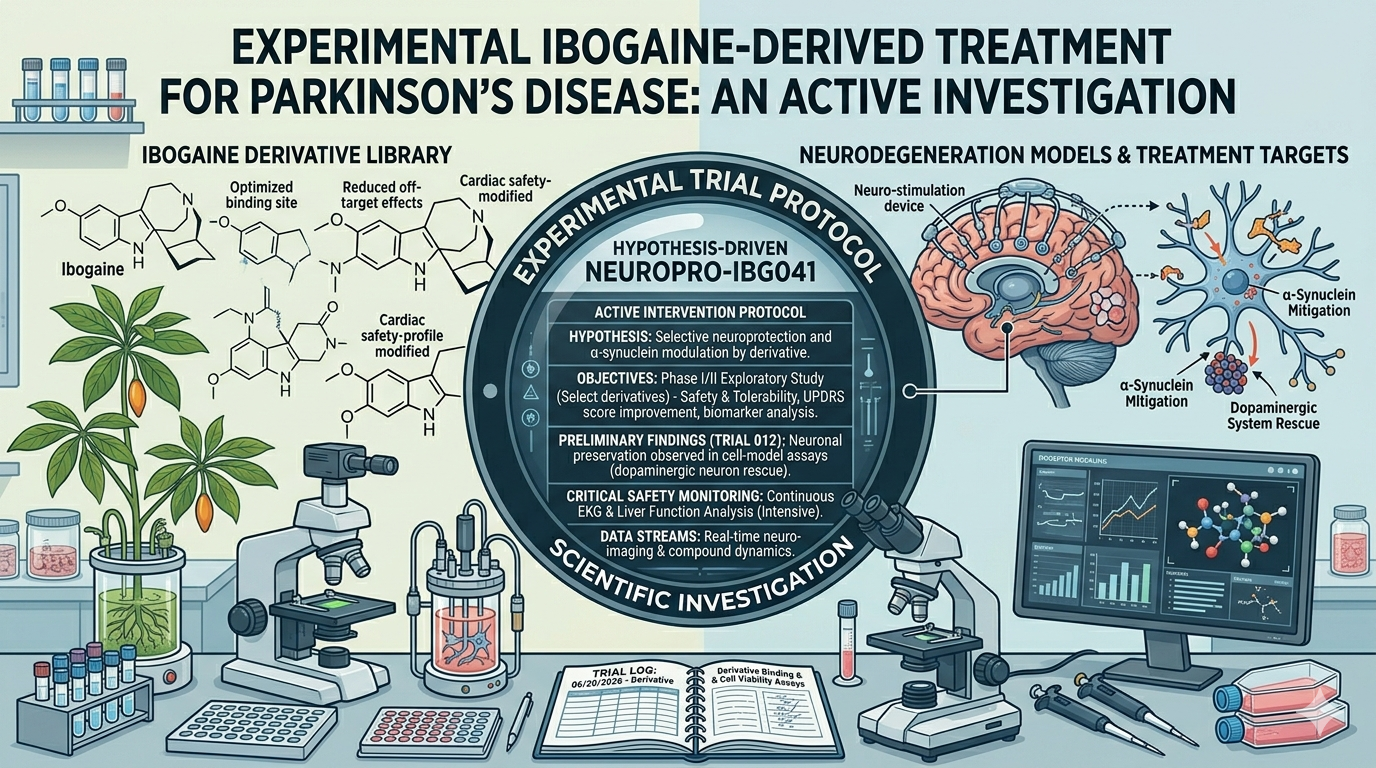
The interest centres on one protein: GDNF (glial cell line-derived neurotrophic factor), which supports the survival and regeneration of dopamine neurons — exactly the cells lost in Parkinson's. Laboratory studies have shown that ibogaine and its long-lasting metabolite noribogaine can increase GDNF expression. Because GDNF is a leading target in Parkinson's research, this has fuelled theoretical hope that iboga's compounds might one day support neuroregeneration. We explain this mechanism further in our overview of iboga and neuroplasticity.
What the Evidence Actually Shows
This is where honesty matters most. The GDNF findings come almost entirely from preclinical (laboratory and animal) research, not human trials. There are no completed clinical trials showing that ibogaine treats or reverses Parkinson's in people. What exists beyond the lab is anecdotal — individual reports, not controlled evidence. Separately, 2024 research from Stanford Medicine highlighted ibogaine's neuroregenerative and neuropsychiatric potential in brain-injured veterans, which keeps scientific interest alive — but that is not proof for Parkinson's. In short: the rationale is real; the human evidence is not yet there.
The Bwiti Perspective
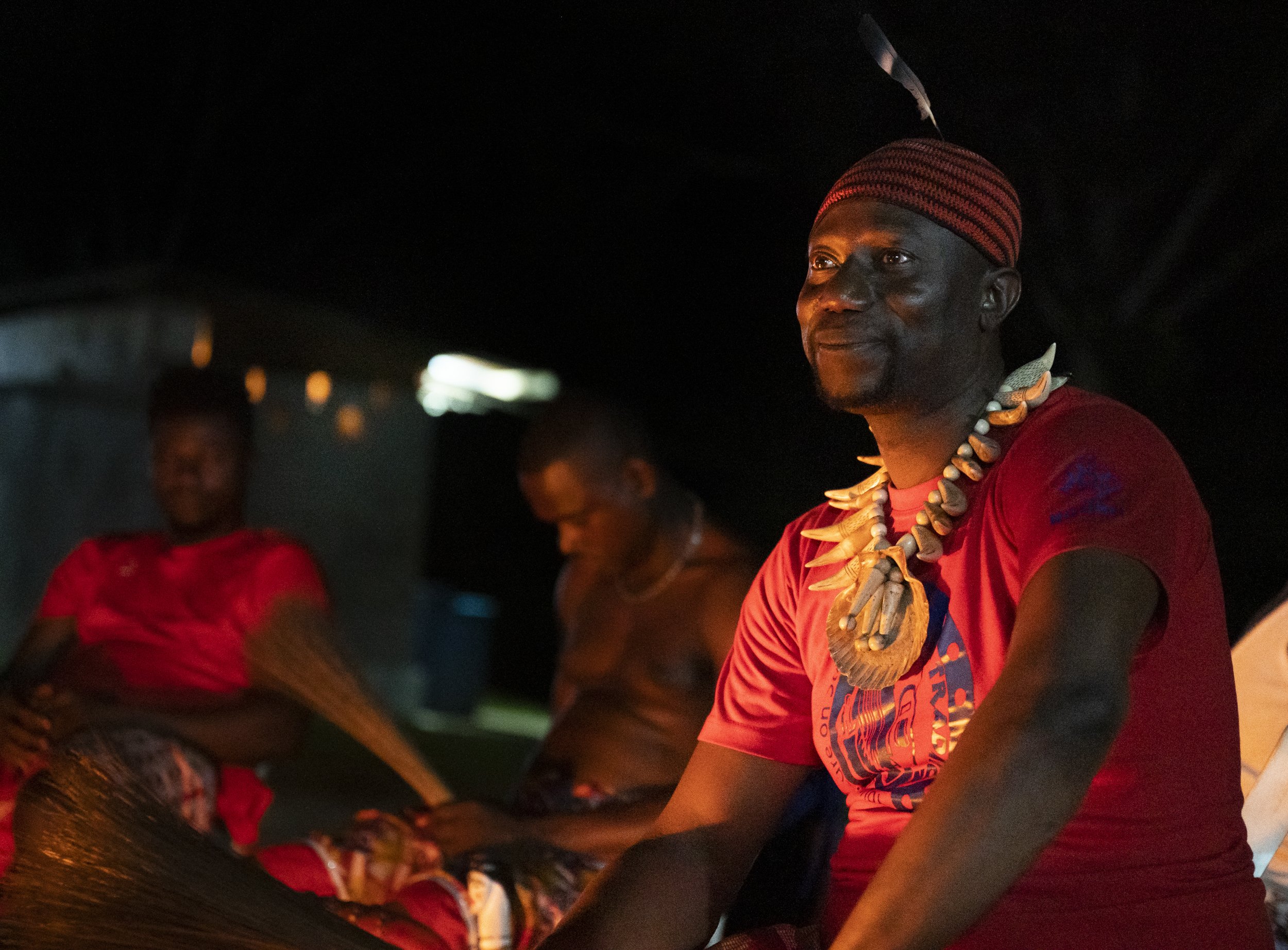
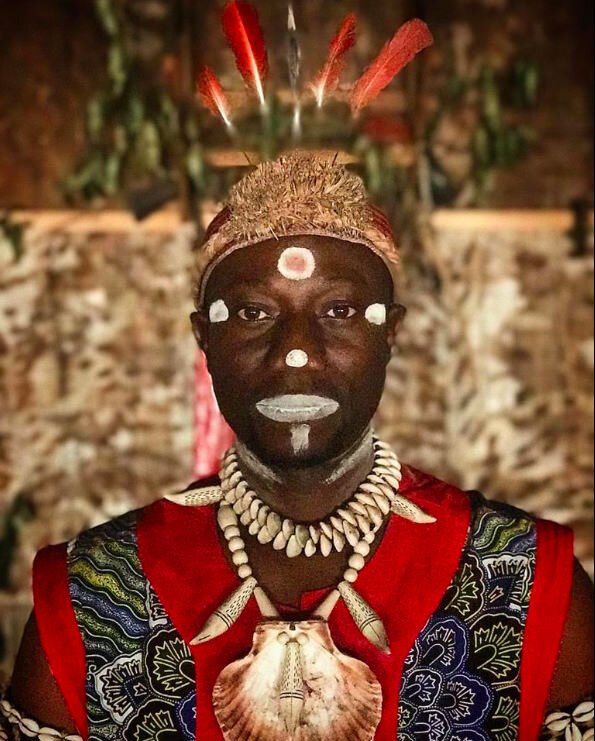
In the Bwiti tradition, iboga is approached as a tool for spiritual and emotional healing, not as a pharmaceutical cure for a specific disease. We are not neurologists, and we do not claim that iboga cures Parkinson's. What the tradition can offer someone living with a serious diagnosis is a different kind of support — meaning, acceptance and connection — alongside, never instead of, proper medical care.
Serious Safety Considerations
For anyone with Parkinson's, the safety picture is especially important:
- Cardiac risk: ibogaine can prolong the heart's QT interval, which can be dangerous without thorough screening and monitoring.
- Medication interactions: Parkinson's is commonly treated with levodopa, dopamine agonists and MAO-B inhibitors. Combining iboga with these — particularly MAO inhibitors — can be hazardous. Medications must never be stopped or combined without specialist guidance.
- Physical demands: a long iboga experience is physically taxing, an added consideration for people with movement and balance challenges.
Anyone considering iboga must first consult their neurologist and undergo full cardiac screening. See our iboga safety guide for more.
Realistic Expectations
If you or a loved one is living with Parkinson's, be cautious of anyone promising that iboga or ibogaine can cure or reverse the disease — the evidence does not support that claim. The honest position is that the science is early and hopeful, the risks are real, and any decision should be made with full medical guidance and clear eyes. Hope is reasonable; certainty is not.
Frequently Asked Questions
Can ibogaine cure Parkinson's disease?
No. There is no evidence that ibogaine cures or reverses Parkinson's, and it is not an approved treatment. Interest is based on early laboratory findings about GDNF, not proven human results.
Is there research on ibogaine for Parkinson's?
Mostly preclinical (lab and animal) research on ibogaine, noribogaine and GDNF, plus anecdotal reports. There are no completed human clinical trials establishing efficacy for Parkinson's.
Is ibogaine safe for someone with Parkinson's?
It carries real risks, including cardiac effects and dangerous interactions with common Parkinson's medications such as MAO-B inhibitors. It should never be tried without a neurologist's involvement and full cardiac screening.
What is GDNF and why does it matter?
GDNF (glial cell line-derived neurotrophic factor) is a protein that helps dopamine neurons survive and regenerate — the cells lost in Parkinson's. Ibogaine can raise GDNF in laboratory studies, which is the basis for scientific interest.
References
- He, D. Y., et al. Ibogaine and GDNF upregulation — research on glial cell line-derived neurotrophic factor.
- Stanford Medicine (2024). Ibogaine therapy and neuroregeneration in veterans — Nature Medicine.
- Parkinson's Foundation — overview of dopaminergic neuron loss and current treatment.
This article is for educational purposes only and is not medical advice. Ibogaine is not an approved treatment for Parkinson's disease. Never start, stop or combine any treatment without consulting your neurologist and a qualified physician.