.svg)


The Short Answer
Iboga is the whole root bark of the Tabernanthe iboga shrub, used for thousands of years in Bwiti spiritual ceremonies in Gabon, Central Africa. It contains dozens of alkaloids working together.
Ibogaine is a single alkaloid extracted from iboga, used primarily in clinical and semi-clinical settings for addiction treatment. It is the most studied compound but represents only one part of the plant's full chemistry.
This distinction matters enormously for safety, for legality, for the depth of healing, and for the context in which healing takes place.
What Is Iboga?
Iboga (Tabernanthe iboga) is a perennial rainforest shrub native to Gabon, Cameroon, and the Republic of Congo in Central Africa. Its root bark contains a complex mixture of indole alkaloids, of which ibogaine is the most studied but by no means the only active compound.
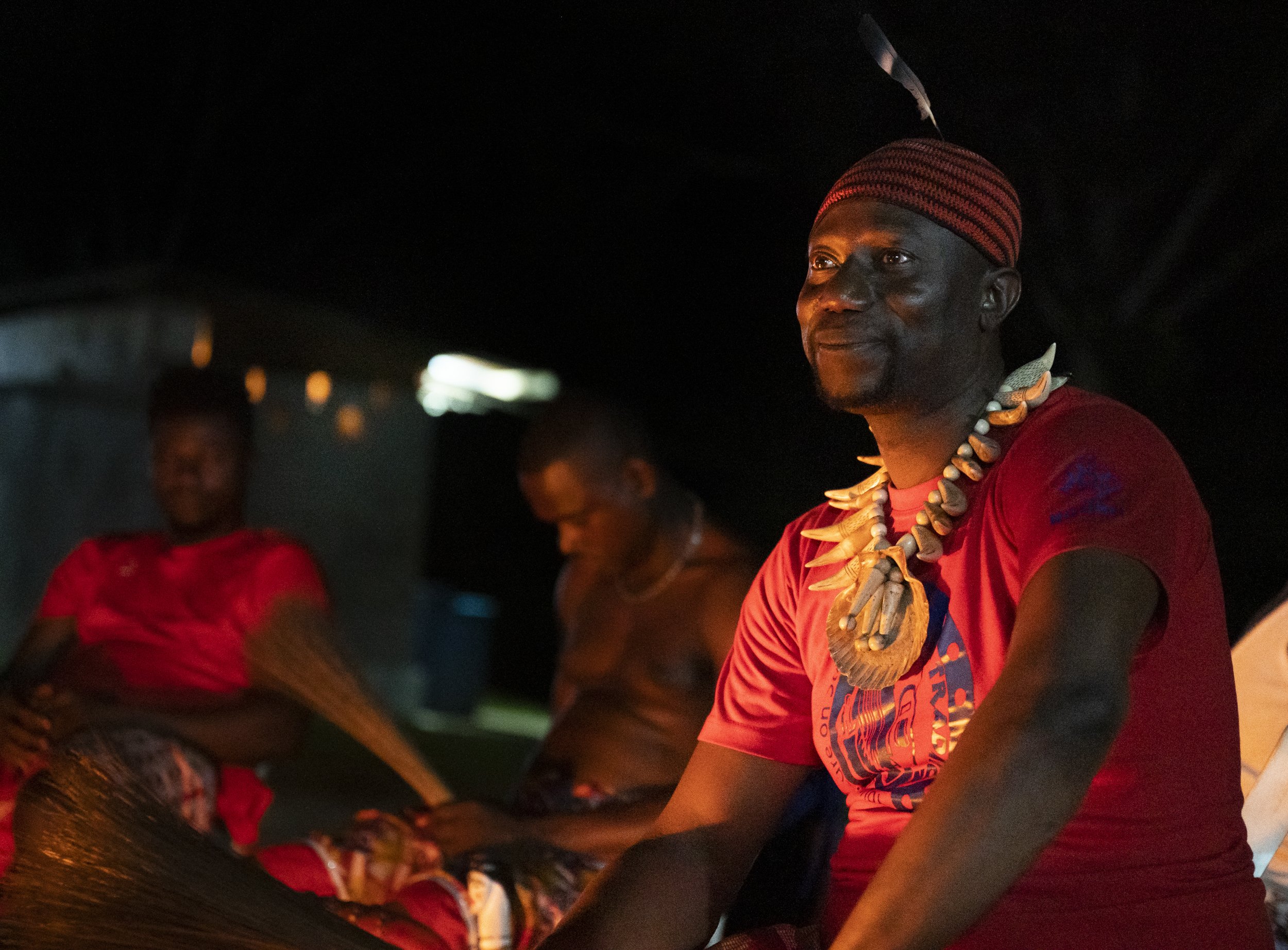
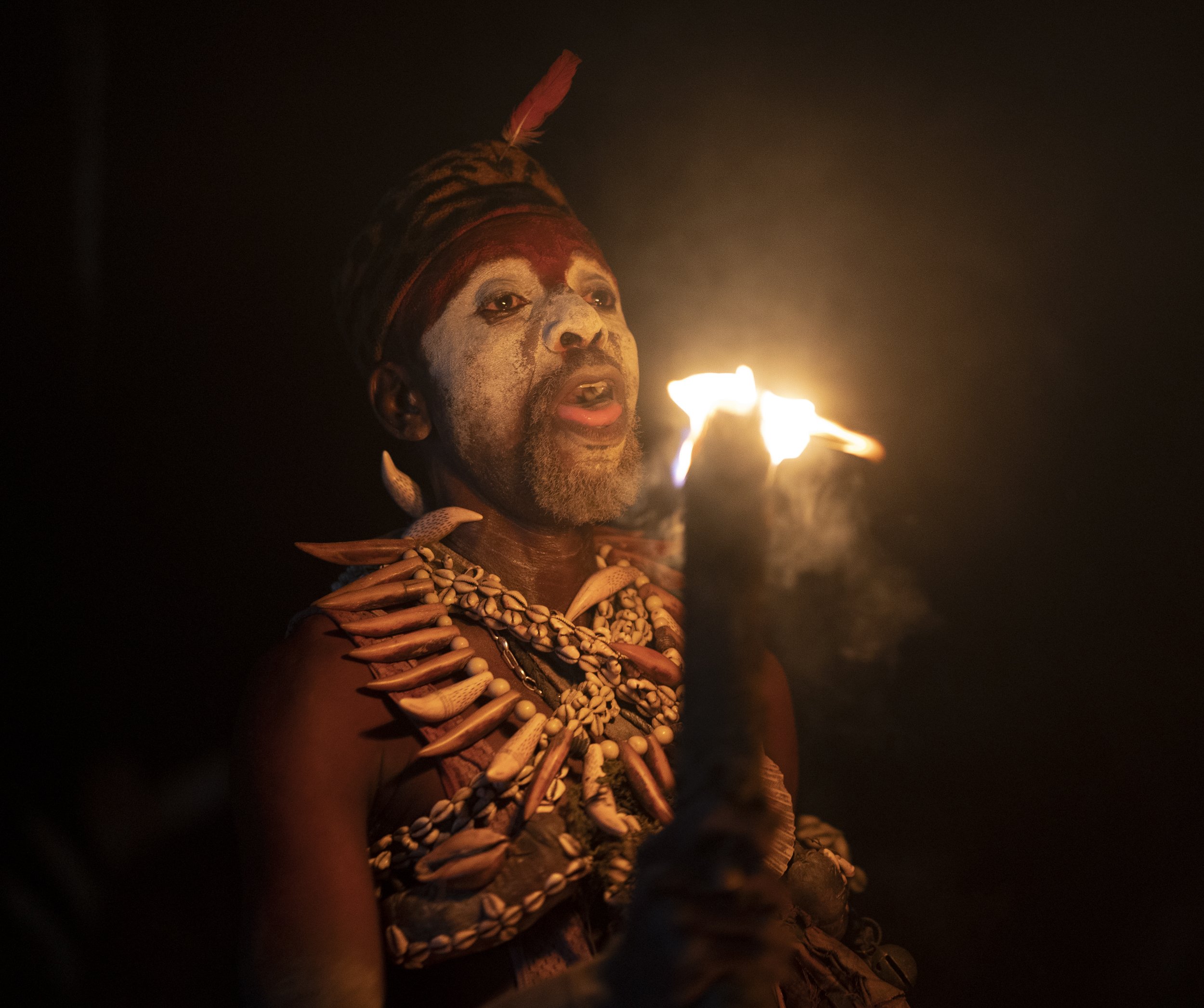
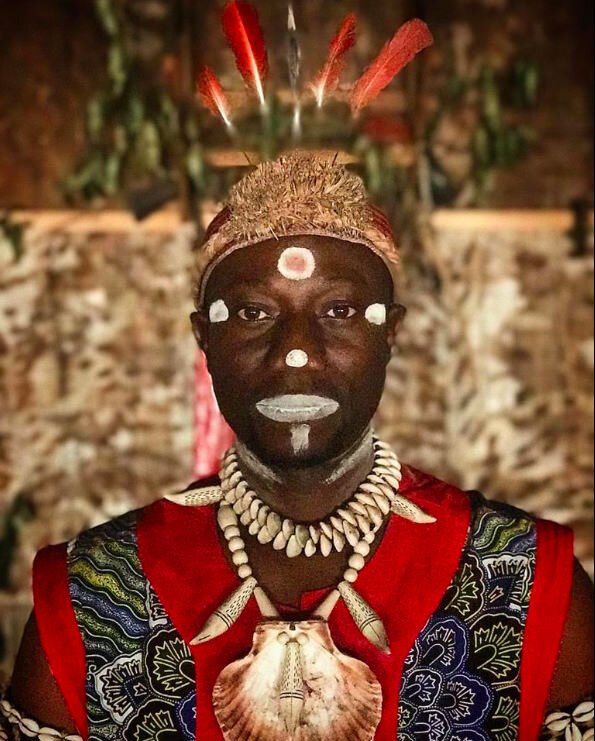
In the Bwiti tradition of Gabon one of the country's three officially recognised religions iboga is used as a sacrament for initiation ceremonies, healing rituals, ancestral communication, and rites of passage. The tradition has practiced with iboga for thousands of years. Gabon declared iboga a National Treasure in 2000, recognising its cultural and spiritual significance.
When people speak of an "iboga retreat," they typically mean participation in a traditional Bwiti ceremony or a ceremony conducted by practitioners trained in the Bwiti tradition using whole root bark in its traditional context.
What Is Ibogaine?
Ibogaine (12-methoxyibogamine) is the primary psychoactive alkaloid in iboga, first isolated in 1901 by Dybowski and Landrin. It accounts for roughly 50–80% of the total alkaloid content in the root bark, depending on the preparation.
Ibogaine gained Western attention in the 1960s when Howard Lotsof, a heroin addict, accidentally discovered its anti-addictive properties. He took ibogaine recreationally and woke 36 hours later with no withdrawal symptoms and no craving for heroin. He spent the rest of his life advocating for ibogaine research.
Today, ibogaine is used in dedicated clinics in Mexico, the Netherlands, Portugal, and other countries where it is legal or unregulated. It is classified as a Schedule I controlled substance in the United States.
The Full Alkaloid Profile: What Ibogaine Leaves Out
Ibogaine is one of at least 12 identified alkaloids in Tabernanthe iboga. The full spectrum includes:
The Bwiti tradition uses the whole root bark, the full alkaloid spectrum together. Many traditional practitioners and some researchers believe the full-spectrum experience differs significantly from pure ibogaine in both its depth and its safety profile. The "entourage effect" seen in cannabis research has a plausible parallel in iboga: compounds interacting synergistically may produce a more rounded, gentler, and deeper healing experience than isolated ibogaine.
Safety Profile Differences
This is the most clinically significant distinction.
Ibogaine (isolated) is associated with cardiac risk, specifically QTc interval prolongation, which can cause dangerous arrhythmias. This risk is well-documented and has contributed to reported deaths in poorly screened patients. Reputable ibogaine clinics require a 12-lead ECG and full cardiac clearance before administration.
Whole-plant iboga, as traditionally administered by experienced Bwiti practitioners, is generally considered to have a lower cardiac risk profile than pure ibogaine — though rigorous comparative clinical data does not yet exist. The full alkaloid matrix may buffer ibogaine's cardiac effects. However, whole-plant iboga should never be taken without proper medical screening.
The experience duration also differs: ibogaine in clinical settings typically produces a 12–24 hour experience. Traditional whole-plant Bwiti ceremonies can last 24–36 hours or longer, with the extended duration considered integral to the healing process in the Bwiti tradition.
Legal Status Differences
Ibogaine is often explicitly named in drug scheduling legislation. Iboga (the plant) may or may not be covered depending on the jurisdiction.
The Experience: What Makes Them Different
Those who have experienced both ibogaine in clinical settings and iboga in traditional Bwiti ceremony frequently describe them as qualitatively different, not merely in dose or duration, but in character.
Ibogaine in a clinic tends to produce a focused, introspective experience, often described as confronting memories and patterns directly, without a broader spiritual framework. The clinical setting (hospital bed, medical monitoring, no music or ceremony) is pragmatic and safe but stripped of context.
Iboga in traditional Bwiti ceremony occurs within a living cultural and spiritual container that has been refined over thousands of years. The continuous music played by trained Bwiti musicians is considered by practitioners to be as important as the plant itself, it guides the experience, prevents the participant from becoming lost, and supports the integration of what is encountered. The shaman's role is not passive monitoring but active facilitation and energetic guidance throughout the ceremony.
Many participants describe traditional Bwiti iboga as a meeting with something, with ancestors, with the plant spirit, with aspects of themselves not accessible in ordinary consciousness. The clinical ibogaine experience is rarely described this way.
Which Is Right for You?
There is no single answer. Both modalities have genuine value and appropriate use cases.
Consider ibogaine in a clinical setting if:
Consider iboga in traditional Bwiti ceremony if:
Bwiti House offers the traditional Bwiti experience led by Moughenda Mikala, a 10th-generation Bwiti shaman. This is whole-plant iboga in its original cultural context, the experience that all clinical ibogaine research ultimately traces back to.
Frequently Asked Questions
Is ibogaine the same as iboga?
No. Ibogaine is a single alkaloid extracted from the iboga plant. Iboga refers to the whole plant and its traditional ceremonial use. They are related but meaningfully different in chemistry, context, and experience.
Which is safer, iboga or ibogaine?
Both require medical screening, particularly cardiac assessment. Whole-plant iboga may have a somewhat lower cardiac risk profile than pure ibogaine, but this has not been definitively established in clinical trials. Neither should be taken without proper medical clearance.
Is ibogaine stronger than iboga?
Not necessarily stronger, it is more concentrated in one compound. The full-spectrum iboga experience is often described as deeper and more multi-dimensional than isolated ibogaine, though this is subjective.
Where can I get iboga legally?
Gabon (traditional ceremonies), Mexico (unregulated), Portugal (decriminalised), the Netherlands (unscheduled), and several other countries. Bwiti House operates primarily in Gabon with a certified provider network worldwide.
Does ibogaine appear on a drug test?
Standard workplace drug tests do not screen for ibogaine. Specialised panels can detect ibogaine and its metabolite noribogaine. The detection window is typically 1–3 days for ibogaine and up to 2 weeks for noribogaine depending on dose and individual metabolism.
This article is for educational purposes only and does not constitute medical advice. Always consult a qualified healthcare provider before considering iboga or ibogaine.